Navigating the Future: The Benefits and Challenges of Business Digital Transformation
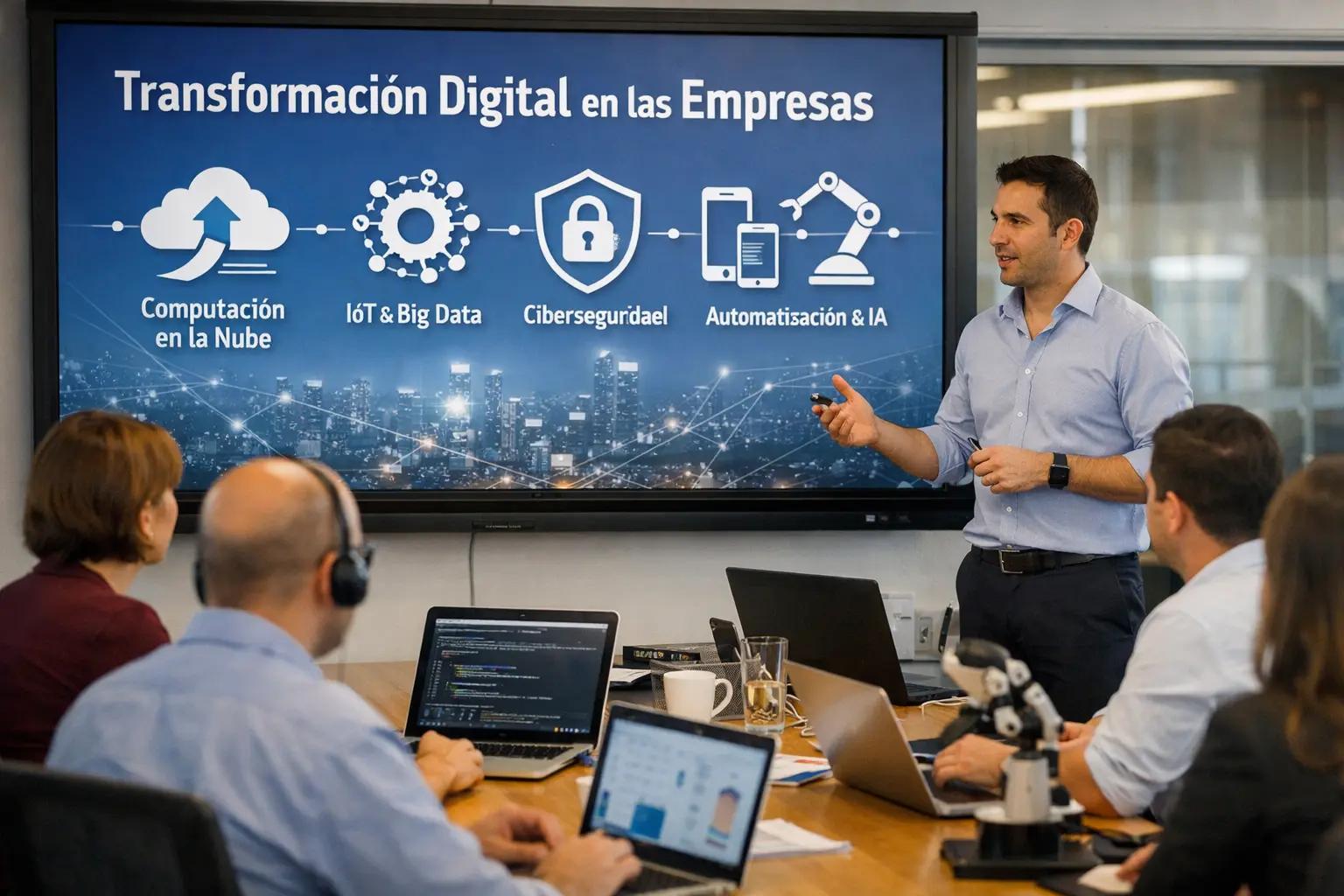
Digital transformation represents one of the most significant changes in modern business history. According to IDC data, global spending on digital transformation is estimated to reach $3.4 trillion by 2026, with Latin America showing annual growth of 17.4%. However, despite these massive investments, 70% of digital transformation initiatives fail to achieve their established objectives.
This paradox reveals a fundamental truth: successful digital transformation requires much more than adopting new technologies. It demands deep organizational change, clear strategy, and the ability to navigate complex challenges ranging from cultural resistance to legacy system integration.
The Tangible Benefits of Digital Transformation
Operational Cost Reduction
Process digitalization generates measurable efficiencies. Companies implementing robotic process automation (RPA) report reductions of up to 40% in operational costs in administrative areas. A representative case: a Latin American bank reduced loan processing time from 15 days to 48 hours by digitalizing its approval workflow, eliminating redundant manual steps.
Quantifiable impacts:
- 30-50% reduction in transaction processing time
- 25-35% decrease in operational errors
- 20-40% savings in physical infrastructure costs
Enhanced Customer Experience
Digital transformation enables personalization at scale. CRM systems integrated with artificial intelligence can analyze behavior patterns and anticipate customer needs, increasing retention rates by up to 15-20%.
Digitally mature organizations show customer satisfaction indices (NPS) 20 points higher than their industry average. The reason: faster response, integrated omnichannel capabilities, and proactive problem resolution.
Agility and Adaptability
The true value of digital transformation became evident during the pandemic. Companies with robust digital infrastructure managed to transition to remote work in days, while others needed months. This agility translates into sustainable competitive advantage.
Organizations with established digital culture can launch new products or services in 30-40% less time than their traditional competitors, allowing them to capitalize on market opportunities more quickly.
Data-Driven Decision Making
Digitalization generates structured data that, when correctly analyzed, transforms decision-making. Data-driven companies report 5-6% higher productivity and profitability compared to competitors relying on managerial intuition.
Specific benefits:
- Real-time visibility of operations
- Early identification of trends and patterns
- Predictive optimization of inventory and resources
- Precise ROI measurement per initiative
The Main Challenges of Digital Transformation
Organizational Change Resistance
The human factor represents the greatest obstacle. A McKinsey study identified that 33% of digital transformation failures are directly attributed to cultural resistance. Employees accustomed to traditional processes perceive technology as a threat rather than a tool.
Common manifestations:
- Slow adoption of new platforms
- Passive sabotage through workarounds to new systems
- Loss of senior talent who refuse to adapt
- Generational gap in digital skills
Technological Integration Complexity
Established companies carry legacy systems that weren't designed to integrate. 60% of IT budgets in large organizations are dedicated to maintaining existing infrastructure, limiting resources for innovation.
Integrating disparate platforms—ERP, CRM, production systems, analytics tools—requires solid enterprise architecture and meticulous planning. Poorly executed integration projects can cost millions and paralyze critical operations.
Cybersecurity and Risk Management
Every digitalization point represents a potential attack vector. The average cost of a data breach in Latin America reached $2.5 million in 2025, not counting reputational damage. Companies in regulated sectors (banking, health, insurance) also face complex compliance requirements.
Digital transformation must incorporate security by design, not as an afterthought. This implies investment in security infrastructure, constant training, and incident response protocols.
Digital Talent Gap
The demand for professionals with digital skills dramatically exceeds supply. Roles such as data scientist, cloud solutions architect, automation specialist, and digital transformation manager are difficult to recruit and retain.
This scarcity raises salary costs and forces companies to develop talent internally through reskilling programs, a process that takes significant time and resources.
Strategies for Successful Digital Transformation
1. Start with a Clear Vision
Digital transformation without strategy is technology without purpose. Define specific measurable objectives: Are you looking to reduce costs? Improve customer experience? Launch new business models? Each objective requires different focus and technologies.
Essential vision elements:
- Alignment with overall corporate strategy
- Quantifiable success metrics
- Realistic phased timeline
- Identification of critical capabilities to develop
2. Adopt a Gradual Change Approach
Radical "big bang" transformations generally fail. The agile approach—implementing incremental changes, learning, adjusting—reduces risks and allows demonstrating early value.
Start with pilot projects in areas with the highest probability of quick wins. These victories generate organizational momentum and justify larger investments.
3. Invest in Change Management
Dedicate 20-30% of the transformation budget to change management. This includes:
- Constant communication: Explain the "why" behind changes
- Continuous training: Not just technical but in new ways of working
- Visible leadership: Executives must model digital behaviors
- Aligned incentives: Link compensation with adoption of new practices
4. Build or Acquire Digital Talent
Successful companies combine external recruitment with internal development:
- Hire strategically: Bring experts for critical and leadership roles
- Develop internally: Implement upskilling programs for existing employees
- Consider nearshoring: Leverage regional talent through distributed teams
- Partner with consultants: For specialized knowledge without fixed costs
5. Prioritize Data Architecture
Data is the fundamental asset of digital transformation. Establish robust data governance:
- Define data quality standards
- Implement centralized repositories (data lakes, warehouses)
- Ensure regulatory compliance (GDPR, local privacy laws)
- Democratize data access through self-service analytics tools
Measuring Digital Transformation Success
Digital transformation requires metrics beyond traditional financial ROI. A comprehensive framework includes:
Adoption Metrics:
- % of digitalized processes
- Usage rate of new platforms
- Reduction in legacy systems
Operational Impact Metrics:
- Cycle time per process
- Error rate
- Cost per transaction
Customer Metrics:
- NPS (Net Promoter Score)
- Customer Effort Score
- Retention rate
Innovation Metrics:
- Product launch time
- % of revenue from new digital products
- Digital R&D investment
Conclusion: The Time to Act is Now
Digital transformation is not a destination but a continuous journey. Companies waiting for "the perfect moment" will discover their competitors already took decisive advantage. The benefits—operational efficiency, better customer experience, strategic agility—amply justify the investment and effort.
The challenges are real and significant, but not insurmountable. With clear strategy, committed leadership, effective change management, and incremental approach, your organization can successfully navigate this fundamental transformation.
The question is not whether to digitally transform your company, but how quickly you can do it while maintaining operational solidity. Organizations that achieve this balance emerge as leaders in their industries.
Ready to start or accelerate your digital transformation? At Alternative, we help Latin American companies design and implement digital transformation strategies aligned with their business objectives. Contact us for an initial no-obligation consultation and discover how we can guide your organization toward the digital future.

CEO, Grupo Alternative
Katherine González
PMP® | ISO 9001 Lead Auditor | MBA
I've spent 15 years helping companies in Latin America optimize their processes. I've seen how BPM transforms companies from within—reducing costs, accelerating growth, and improving the quality of life for teams.
Share this article